





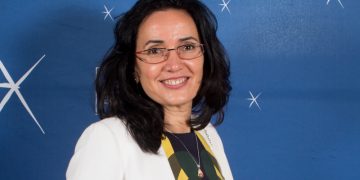
Interview with Robert Wilton writer, diplomat and traveler
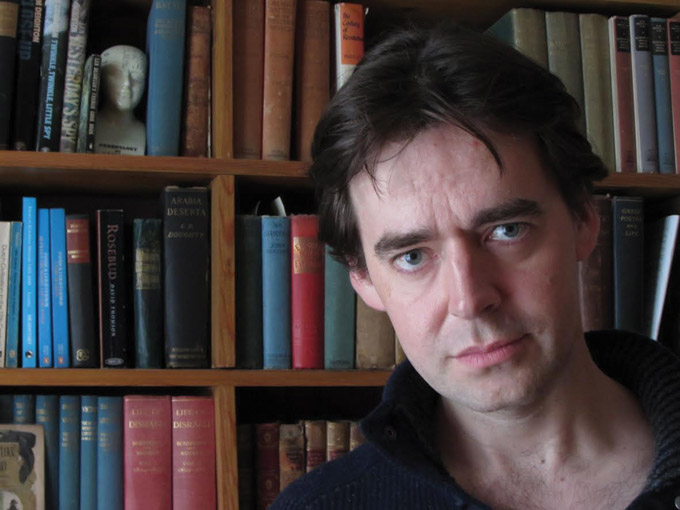
Mr. Wilton, could you please tell us a few words about yourself? Who is Robert Wilton?
I’m never quite sure who he is, or where he lives, or what he does. I’m a novelist – the next in my series of historical thrillers, The Spider of Sarajevo, is dedicated ‘To the Albanians’ and is published in June 2014 on the centenary of the events it describes. I’m a civil servant who has got involved in diplomacy, development and state-building. I help behind the scenes with The Ideas Partnership charity in Kosovo. I write and talk about international intervention and the Balkans, I translate a little poetry, I miss the English countryside and the north Atlantic, and I spend a lot of time on the bus between Tirana and Prishtina.

You have worked for years in Balkans; was it a personal choice or simply a job opportunity?
One of the characters in The Spider of Sarajevo has a conversation with his lover about whether he works in the Albanian highlands because he wants to understand people or simply because he wants to belong somewhere. I was hungry for experience, for life, and I was lucky that I had the right experience and abilities and was getting restless at exactly the moment when the Prime Minister of Kosovo decided he wanted a British Advisor. The Spider of Sarajevo is informed not only by my familiarity with the politics and diplomacy, but more by the people and the places: the kullas I’ve stayed in; the weddings I’ve danced at; the hospitality of a family in the northern highlands or a shepherd in his summer camp in the accursed mountains. I translated Ajkuna’s Lament several years ago when I was at Thethi, where ‘scaling the peaks with the ghosts of the brave’ has greater resonance.
You have worked for seven years in Kosovo before and after independence. Have you encountered difficulties at work? Could you tell us anything about your experience there?
I learned that having a coffee isn’t a distraction from doing business; it is doing business. I learned that when a system fails you, human beings will usually help you. I can’t think of many difficulties: I found more frustration with foreigners than with the people of Kosovo and Albania. One frustration has been those who say that because I helped deliver independence for Kosovo I am ‘pro’ one community – and, worse, ‘anti’ another community. This misunderstands my attitude to the situation and to the people.
Which moments stand out from that time?
Independence night: not for the politics, or for my own very minor role in the achievement, but because on that amazing night in the streets of Prishtina so much suffering and waiting and antagonism became, temporarily, pure joy.
You are currently working as deputy Ambassador of OSCE Presence in Albania. How would you describe your job?
My work is now easier – everything I do and say is based on the advice, words, activities and commitment of the people who work for me. And the rewards are greater – by guiding and empowering some really impressive professionals I’m helping them to drive important work in human rights, the protection of children and women, the functioning of a parliament and a judiciary – things like that that change lives; things I can really care about. Speaking out about domestic violence, for example, or about minority citizens evicted onto the street to make way for a building project; working with young people to help them understand and engage with their own political system – this seems meaningful.
You are one of the founders of The Ideas Partnership, a charity organization. Could you tell us more about the goals and activities of this organization?
The Ideas Partnership was founded by my partner Elizabeth Gowing, Ardian Arifaj and I to stimulate and support work in education, environment and cultural heritage – in Kosovo and now we’re spreading. The organization has got a lot of attention for our work with the Ashkali community in Fushe Kosove: we started trying to help the children win their rightful places in mainstream school, and this has expanded into work in support of community development, healthcare, adult literacy and economic self-support through micro-finance projects. I think what makes us different is that almost all of our work is done by volunteers, which makes us very economical and gives us credibility with supporters and beneficiaries, and that we work on the ground, day-to-day, door-to-door, among and with the community, building relationships and helping it to achieve. The suffering and deprivation are desperate; the achievements of those people – the young men who have worked their way to college, the older children who are now helping as teaching assistants in our classes, the girl who can now write her own name – are wonderful.
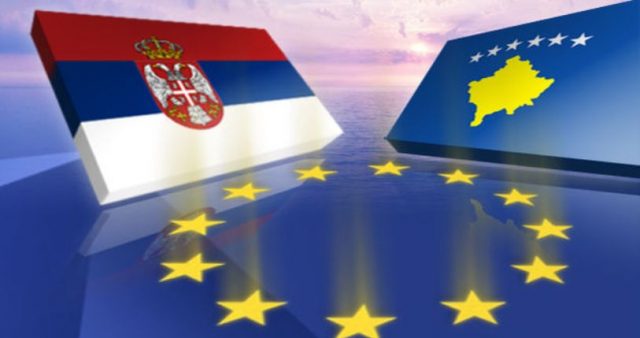
As a diplomat, what is your opinion on the progress of Albania and Kosovo and their chances for speedy integration in the EU?
As a diplomat, I will not say anything on progress, for which you should ask the EU! Personally, it seems obvious that the EU is the only path for Albania and Kosovo, and I’m impressed by the clear popular commitment in both countries to this path.
Which are the main obstacles for these two states, causing the delay in this process?
Again, this is a question for the EU. I don’t think it’s fair to talk about delay, when you consider the very difficult positions where Albania and Kosovo started. There are genuine and challenging technical obligations for EU progress. And – as my Albanian friends in London will understand well – integration is also about attitudes.
When EU citizens consider potential member states, they don’t think about technical things such as what laws have been passed: they think about attitudes in the potential member state – to honesty in public life, to women, to the environment.
There are still some Albanian diplomats who think and act as twenty years ago, even as they talk very grandly of democracy, of freedom of speech and of opinion. What would you advise in this case?
I hope that all issues are approached in a forward-looking way – in the name of the people of 20 years in the future, not 20 years in the past. Not all traditions are healthy; The Spider of Sarajevo is dedicated to the Albanians not only in gratitude for hospitality, but also ‘in the hope that they may escape historical fictions’.
In 1916 Bryce, a British diplomat, in a despatch prepared for the FCO, referring to Albania wrote: “…Here the solution might seem to be to divide the country between the three adjacent Powers, Serbia, Montenegro and Greece. But the northern Albanians are hereditary enemies of the two former stated and none of the three is strong enough to maintain order among turbulent clans … It might be the best course, after drawing boundaries round the Albanian territory, to leave these clans severely alone …If left alone they would in time settle down when they saw the countries around them prospering under peace…”.
Today, after nearly 100 years of this report, what is your opinion as a British diplomat?
No more games with lines on maps; this isn’t a competition for land or an attempt to avoid people. The history of British diplomatic engagement in the Albanian lands is a history of good intentions and bad implementation: 1912-14; 1942-45; 1949-51; perhaps even more recently. We have continued to fail to learn lessons. At the same time there’s a rich history of Albanians living in London and flourishing, and of British travellers who developed a familiarity and even love for Albania. Somewhere there is an affinity of spirit which continues to resonate.
As an author you have written analytical articles, short stories and historical novels. Could you talk a little more about your activity as an author?
All writing is a desperate attempt to understand and to be understood. I think the diverse kinds of writing – Government policy papers and Albanian poetry – influence each other. My fiction is informed by an understanding of the historical and political contexts. My analysis is informed by a sense of the human experience historically and now. Translating poetry has made me sensitive to the weight of a single word, the weight of a single human thought.
You speak Albanian fluently, and you’ve just given a lecture at the Albanian Embassy in London around your translations of Albanian poetry; what has led you in this direction?
For me, Albanian poetry – like her history, her culture and her language – has been another way to explore. To engage with the culture of a place where one is a guest is a pleasure as well as a courtesy. Translating poetry has a very strong subjective element: the creativity necessary to produce something meaningful in English, the empathy necessary to try to understand what De Rada or Migjeni or Poradeci was really thinking; and it has a very precise demand – the need to find precisely the right word to fit rhyme and rhythm and meaning.
What is your message to Albanian politicians and diplomats on both sides of the border?
Be proud and be humble. Worry about the bridges not the borders. To be leaders of your countries in this exciting and critical time of transition is the greatest honour, and an opportunity for you to achieve things for your countries that no leaders have had or will have again. Will history record your inadequacy, your insecurity and your stealing? Or will history record your vision, your bravery and your greatness? Travel, read, listen.
The Spider of Sarajevo is available through Amazon in hardback and for Kindle, and in good bookshops. Robert Wilton is on Twitter @ComptrollerGen, following the lead-up to the First World War.
By Jeni Myftari